

Do you really even need a plan for eating and drinking in Melbourne? It’s the type of city where you can wander out into the streets and predictably stumble over all manner of fantastic cafés, wine bars, and noodle shops. As a restaurant critic, I’m often asked how to approach dining in my hometown. Invariably, one of my first suggestions is to start off somewhere in Fitzroy or Collingwood, wander into the city through one of our beautiful, manicured parkland gardens, grab a seat at whatever charming sidewalk table looks fun and popular, or venture down a cobblestone laneway and find a hidden cocktail bar—in short, let the city lead you where it may.
But although the city rewards such spontaneity, there are a few must-try experiences worth planning, especially if you’re interested in exploring the vast wealth of diversity the city has to offer. Chase the hot new inner-city restaurants, and you may miss out on the chance to taste the massive Greek- and Lebanese-influenced classics. Or you could get lost in the plethora of wine bars and never experience the amazing Thai, Laotian, and Filipino restaurants in town. The city has a well-earned reputation for being heavily Euro-influenced—you could be forgiven for mistaking certain parts of town for some charming village in Italy or Spain—-but we’re also increasingly an Asian city, a Middle Eastern city, and, because of more recent immigration, an African city.
So, put aside a day to wander, and let Melbourne lead you wherever she desires. Then make a plan to get to as many of these don’t-miss gems as possible.
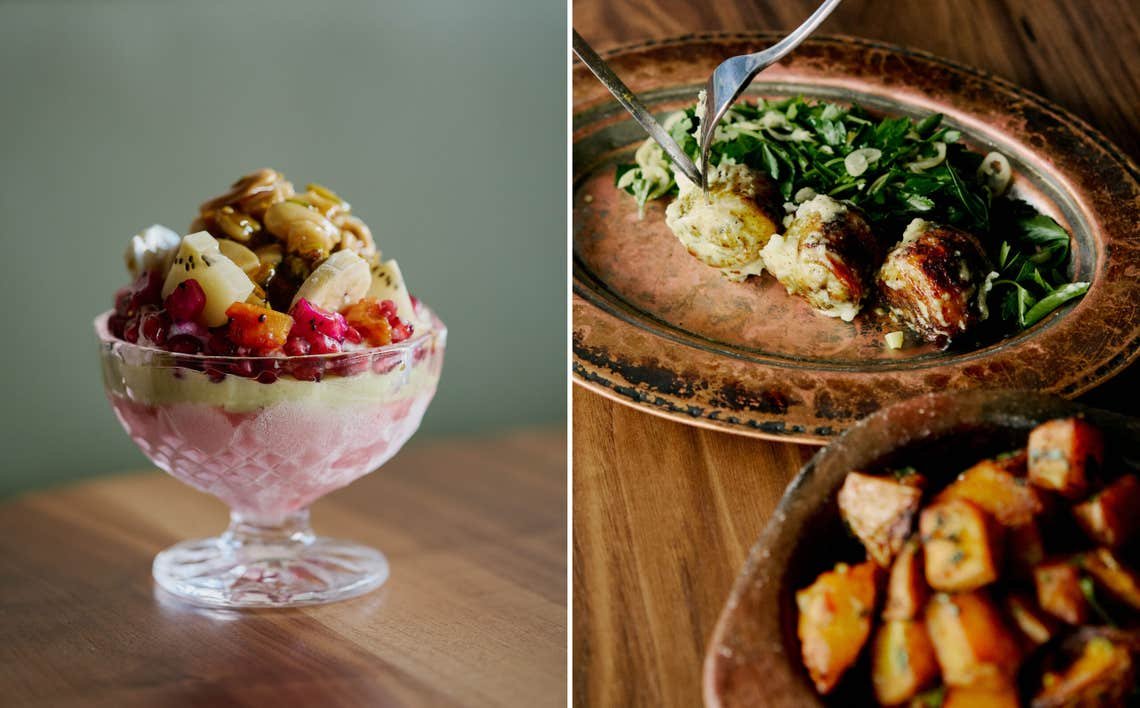
Chef Tom Sarafian has long been a fixture on the Melbourne Lebanese food scene, guest-starring in other people’s kitchens and putting out a cult line of jarred hummus. At his first restaurant as owner, Sarafian has created a space that feels forged out of pure joy. The small shop front bops with records spun behind the bar/dining counter/open kitchen, a rotation of Levantine funk and jazz from the ’70s. The chef and his team put together a cohesive menu of Armenian and Lebanese live-fire classics, occasionally modernized and given an Australian spin. That hummus, silken and tangy, comes topped with a mixture of king prawns and spanner crab, giving it a generous oceanic richness. Impossibly juicy chicken kebabs are zapped with pickled green chile and toum. There’s a lovely selection of Armenian and Lebanese wines, alongside Australian labels and a rotation of cocktails entirely based around arak. Dining here is like going to a house party with the best food and music—and falling in love with your hosts.
Fitzroy Gardens, Melbourne
61 03 9691 3800
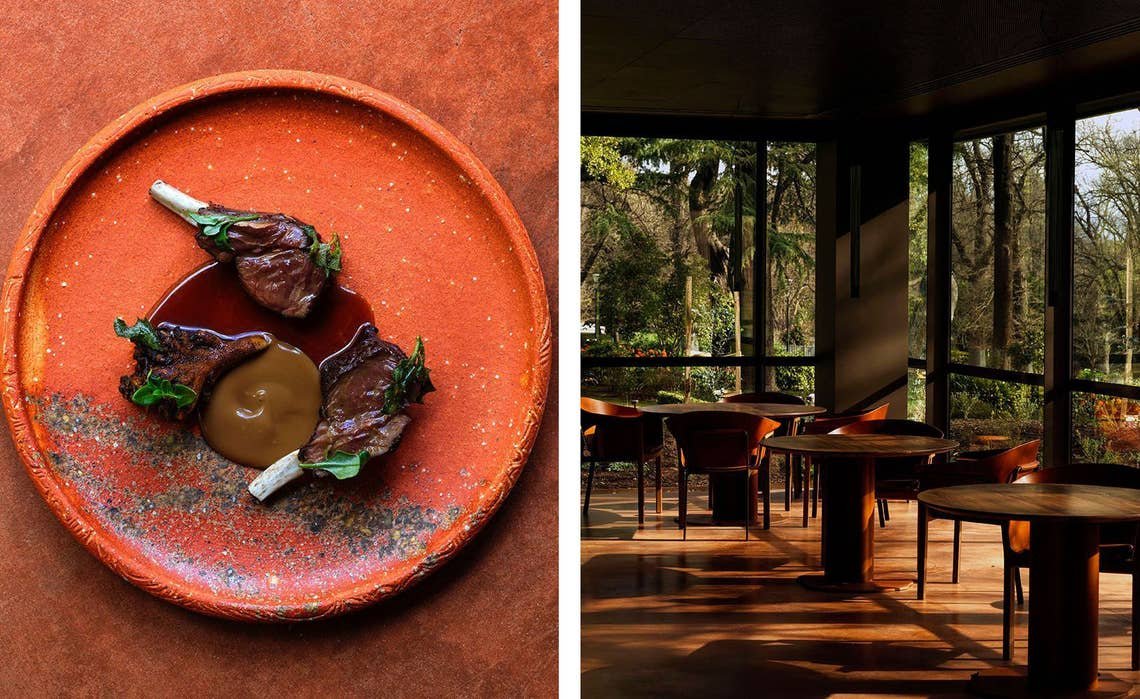
It’s hard to overstate the ambition of Yiaga and its chef-owner, Hugh Allen. Allen has also been the executive chef of Vue de Monde, one of Melbourne’s finest fine-dining restaurants, since he was 23 years old. Now, at the ripe old age of 30, he’s opened Yiaga in the middle of Fitzroy Gardens, a manicured parkland on the edge of the central business district. Made from undulating clay tiles meant to evoke the Australian landscape, the restaurant is as much a design nerd’s fantasy as it is a place to eat. Allen serves a tasting menu that does a good job of answering the question What is Australian food? Local squid comes in a bath of desert lime and Thai basil; flame-grilled kangaroo rests in a gravy spiked with native peppers. Harmonious rather than pretentious, this is that rare blowout meal worth the hefty price tag.
Tucked into the backstreets of Fitzroy, Carnation Canteen is a wine bar and restaurant that you’d likely never find unless you went looking for it. The quiet storefront used to be a corner shop and is now one of the city’s loveliest venues for a long lunch or intimate dinner. Chef Audrey Shaw follows a vaguely Mediterranean playbook, creating deceptively simple dishes that still manage to surprise and delight. She might take local sardines, layer them with lemon-soaked currants, wrap them in grape leaves, and grill them over charcoal, or cook eggplant slices to a pleasing slump before topping them with strained yogurt and bottarga. Service is breezy but razor-sharp, somehow managing to give you exactly what you want, exactly when you want it. Shaw has recently opened the more drinks-focused Bar Carnation in nearby Carlton North, which is an excellent choice for cocktails, wine, and nibbles.
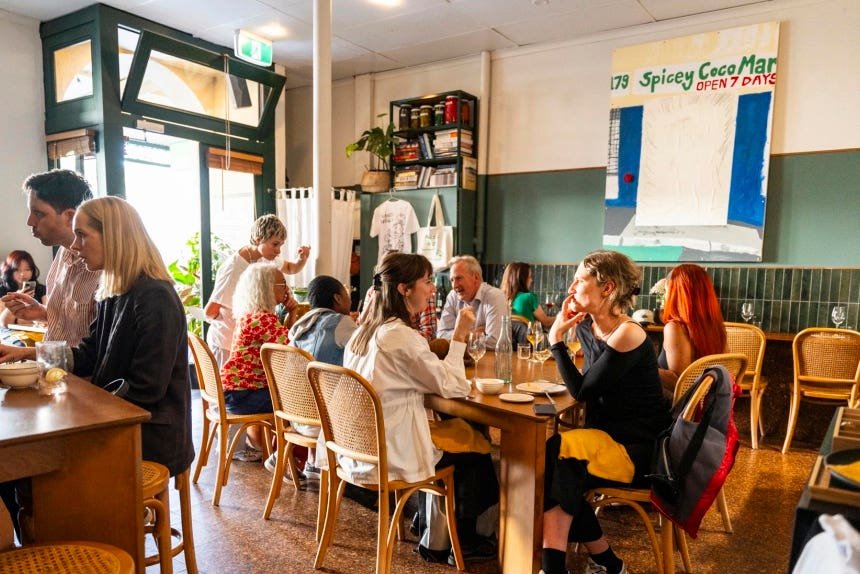
Mauritius, the island nation in the Indian ocean east of Madagascar, is the home of chef Nagesh Seethiah. At this small shopfront in North Melbourne, he’s paired the combination of influences (African, French, Chinese, and Indian) found in his native cuisine with an exciting selection of natural wines. You can nibble moolkoo, a traditional Mauritian fried rice-flour snack, here served with curry leaf and local radish, or slurp bouillon brèdes, a broth made with mizuna and ginger. If you’re lucky enough to catch the menu on a day with crab, often drenched in masala butter, do not hesitate. In some ways this is the most Melbourne of places: a melding of cultures that makes for something remarkable in the most laid-back setting.
7 Racing Club Lane, Melbourne
+613 9600 0016
In many ways, Serai is a classic Melbourne restaurant, located in a sunny vintage storefront down a charming laneway in the city center. In other ways, it’s revolutionary. Chef Ross Magnaye is reinterpreting Filipino dishes using Australian ingredients, cooking mostly over live fire. The results are thrilling: “kilawin” made with seared kangaroo; wild barramundi with smoked calamansi; kinilaw, the traditional raw marinated fish dish, reimagined using Queensland swordfish and pink peppercorns. Magnaye also has a keen sense of humor and nostalgia, which are evident in his riff on McDonald’s Filet-O-Fish using king prawns and crab fat, or his spin on a classic Australian ice cream bar featuring pandan and smoked coconut cream. Natural wines and Filipino-inspired cocktails round out the offerings.
Opened in the mid-1980s (the restaurant celebrated 40 years in 2026), when Brunswick Street was a wasteland of empty storefronts and hippy thrift shops, Marios helped to define the Melbourne café and our specific version of Italian eating. Starting at 8 a.m., the checkerboard-floored room with its chrome accents and art-covered walls hosts regulars who might go for a classic café breakfast or a piece of toast with homemade jam. From lunch on, it’s a full menu of pastas and homestyle Italian dishes. Don’t sleep on the chicken livers, cooked to rosy perfection in a madeira and onion sauce, or the giant slab of lasagna. Servers wear shirts and vests and act like your best sardonic friend. An icon but also a true locals’ hangout.
Sydney Road in Brunswick is the center of Melbourne’s Lebanese community, and the center of that center is A1 Bakery. Open since 1992, the hangar-like space is a constant bustle of families eating together, old men speaking Lebanese Arabic over strong coffee or tea, and groups of high school kids chowing down on the insanely affordable man’oushé and cheese-stuffed pies. In the morning you can order a full Lebanese breakfast with two eggs, sujuk, labneh, cucumber, tomato, olives, mint, and a stack of pita. Later in the afternoon, you might order a kibbeh platter or a creamy bowl of ful medames, slick with olive oil, lemon, and tahini. If there’s an important football game happening, the televisions on the wall will be playing it, but even on Grand Final Day (Australia’s biggest sports day of the year), the vibe at A1 is all about family, community, and in-person connection. Nowadays, the A1 has three branches, including one in on-trend Fitzroy and another in a shopping center, but the original location has a little extra charm.
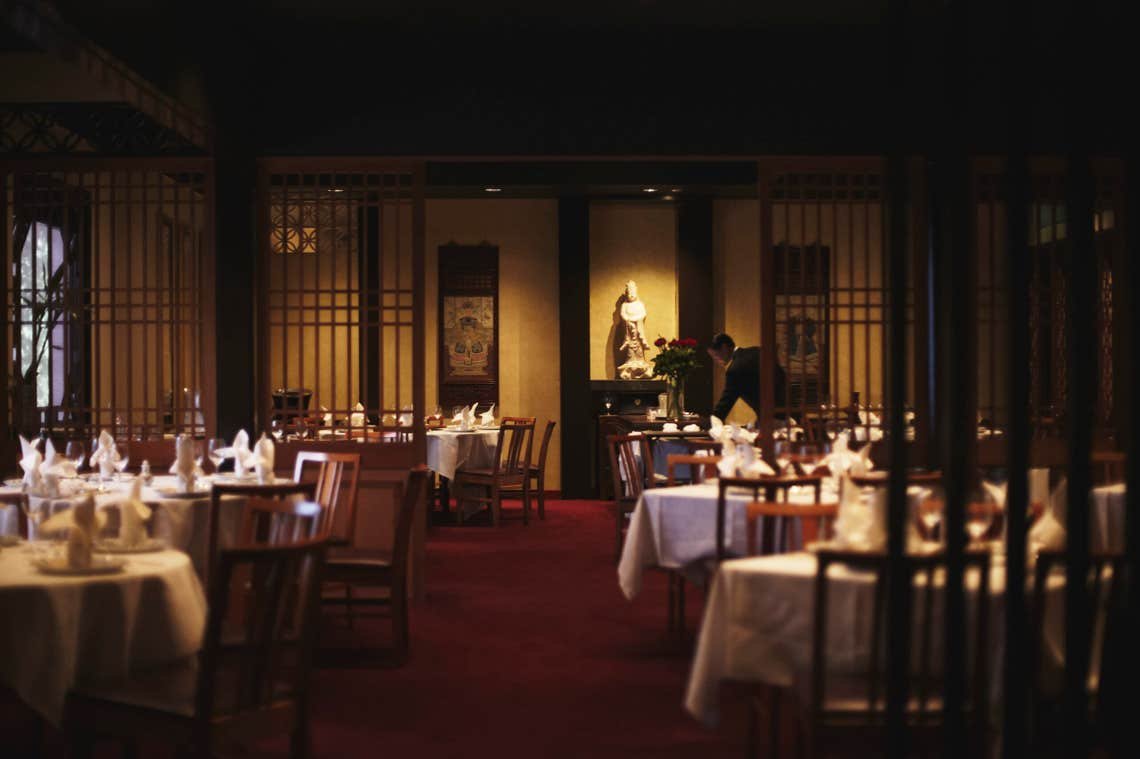
I’ve long contended that Melbourne doesn’t quite know what it has in Flower Drum, which has been open in Chinatown since 1975. As beloved as the sprawling upstairs restaurant is, do we really understand that this is probably one of the best Cantonese fine-dining restaurants in the world? Much of its success is due to the fact that executive chef Anthony Lui and his son Jason have never stopped evolving the menu while maintaining a dedication to old-school professional service that’s unmatched in the city.
The room is classic: red carpets, white tablecloths, massive flower arrangements. The options are downright overwhelming, spanning everything from dim sum to noodle dishes to meats to seafood plucked live from on-site tanks. Luckily, there’s a banquet option, and servers provide expert guidance. Some standout dishes: a mammoth soup dumpling filled with mud crab, scallop, and prawn, its wrapper impossibly delicate, swimming in a subtle and fragrant broth; the Peking duck, carved tableside then wrapped in a feather-light pancake with cucumber and plum sauce. Lau does the classics beautifully, but he is not afraid of modernism—he makes noodles out of barramundi and showers them with sun-dried tangerine zest, pork sausage, and shiitake mushrooms. This is not a cheap night out, but it is one you won’t soon forget.
65–159 Victoria St., Melbourne
No phone
Whenever I get off a plane from anywhere, I head directly to the Bratwurst Shop, a family-owned stall that has been slinging sausages made from Australian pork and beef since 1976 in Queen Victoria Market. Standing in the market’s gorgeous vintage deli section grounds me and lets me know that I’m home. QVM is the most popular travel destination in Victoria, and though the outdoor sheds are fun, they’re full of touristy junk, too. The real magic is inside, where, aside from bratwurst, you can find savory Turkish stuffed pastries at the Borek Shop, along with all manner of cheeses, cured meats, and picnic goodies at the many, many deli counters. Outside on Queen Street, get in line for the American Donut Kitchen truck, which serves freshly fried hot jam doughnuts, a Melbourne specialty.
338 Bridge Rd., Richmond
No phone
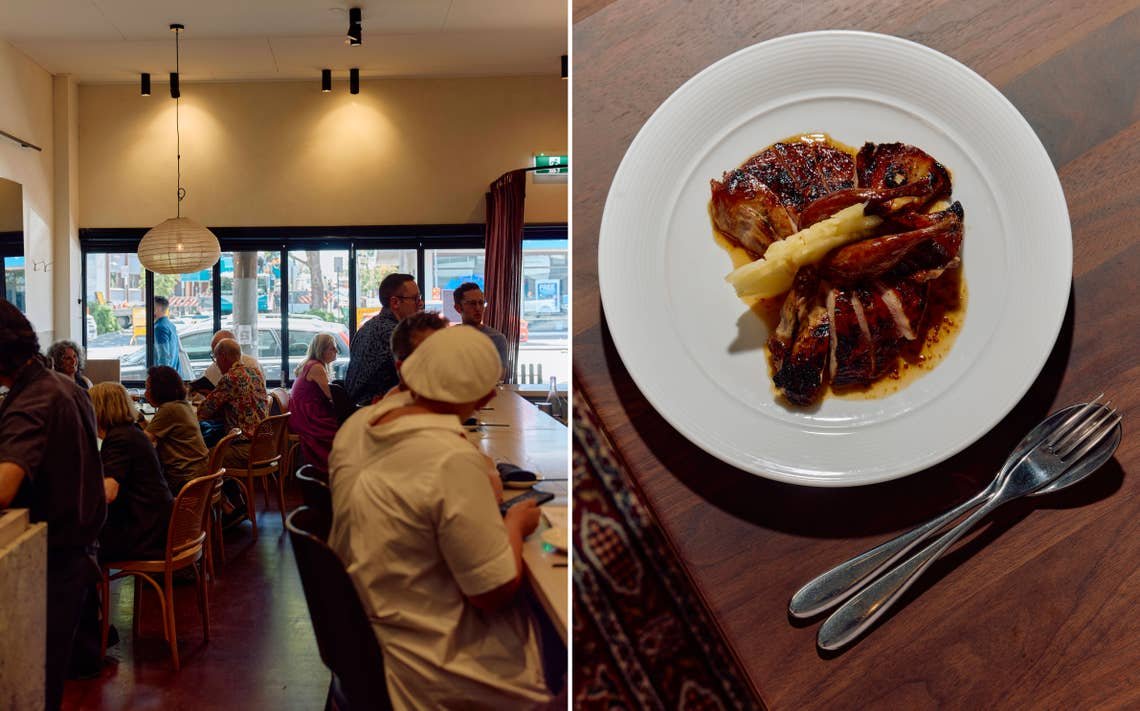
Chef Thi Le and her partner Jia-Yen Lee have been running various versions of their restaurant for more thana decade now before finally coming back to the original space and premise: a refined take on Vietnamese Australian cooking in a sparsely designed room in Richmond. Le is a fastidious cook, making everything from scratch, including her own fish sauce, and the resulting food is blindingly flavorful. You might find smoked duck, presented among leaves of rosa radicchio and perfumed with galangal, or onion tarte Tatin with pho spices and bone marrow. The cocktails are lightly tropical without veering into tiki territory, wine is thoughtfully chosen with the food in mind, and service is super informed, making for a relaxed neighborhood joint—even while the food is world-class.
83b Gamon St., Yarraville
+61 3 9939 9774
While there’s no shortage of stellar meals to be had in the city, the tasting menu at Navi feels more personal and considered than many of its contemporaries. Chef and owner Julian Hills is intimately involved in every aspect of the dining experience—yes, he probably foraged the mushrooms found on your plate of brassica-wrapped rabbit, but he also literally made the plate. (He is a prolific potter and makes all the ceramics used in the restaurant.) Hills uses ingredients indigenous to Australia with assurance and a focus on pleasure. Navi is a difficult reservation to snag, but there’s a lounge in front with terrific cocktails and nibbles that is easy to walk into.
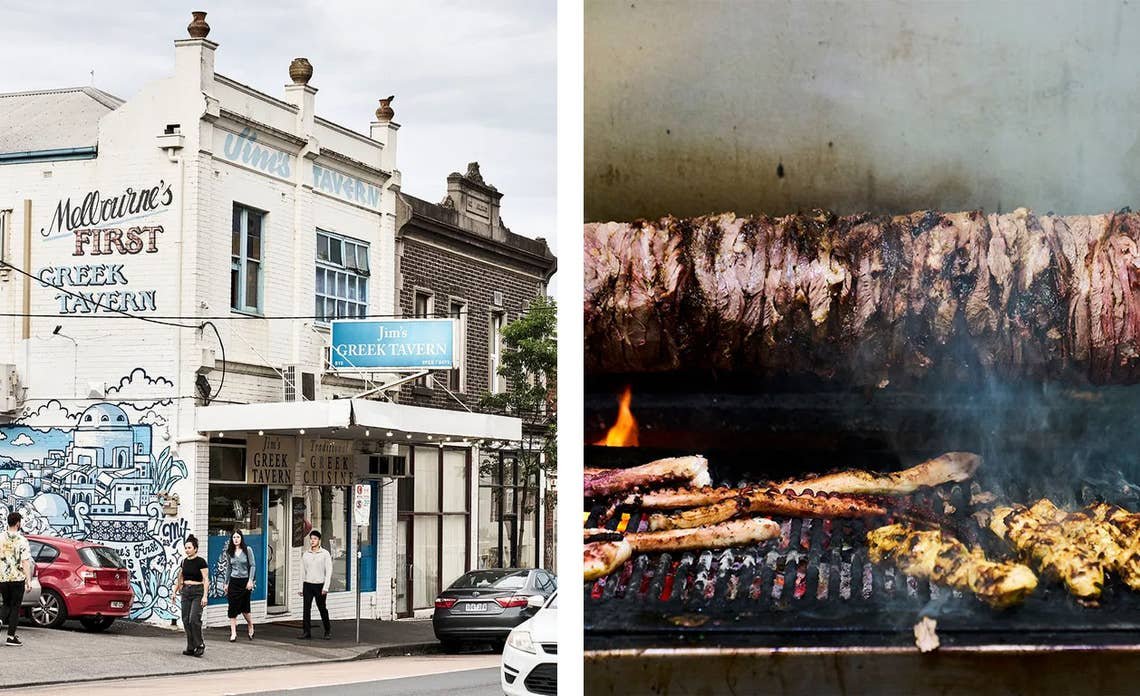
This is one of those restaurants that, to me, represents the old soul of Melbourne. Be ready to shout over the din of the room packed with revelers. There are no menus, the waiters (exclusively older Greek men) have a kind of negotiation with you to form a conclusion about what you should eat. (“You want dips? You want fish? Maybe some lamb?”) It’s BYO-only, and there’s a communal fridge at the front of the room for your beers or champagne. Jim’s is like stumbling into a huge family party in the heart of Greek Melbourne.
Keep Reading
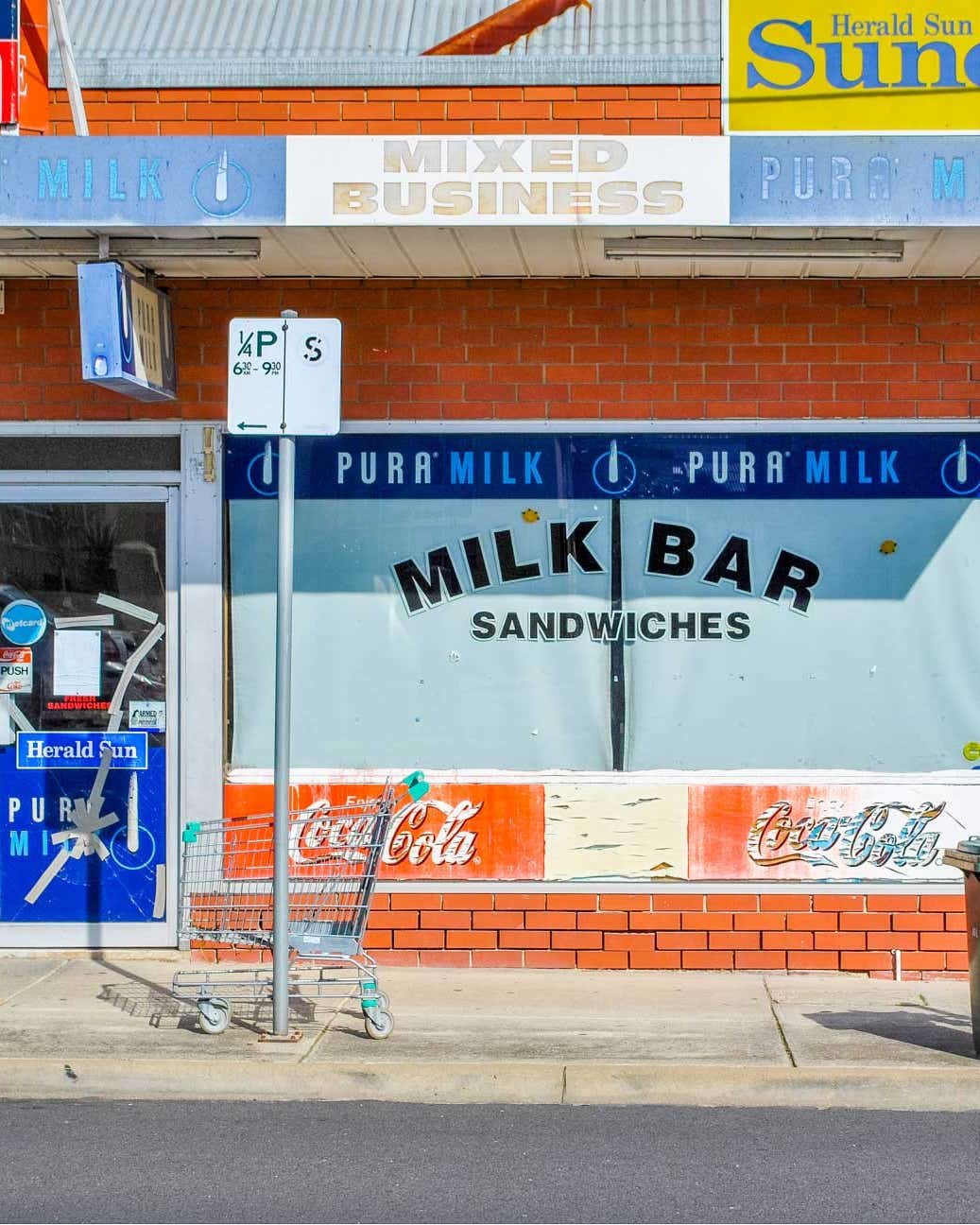
Remembering the Milk Bar, Australia’s Vanishing Neighborhood Staple

An Introduction to Australia’s Indigenous Ingredients

The Steward of Australia’s Original Food
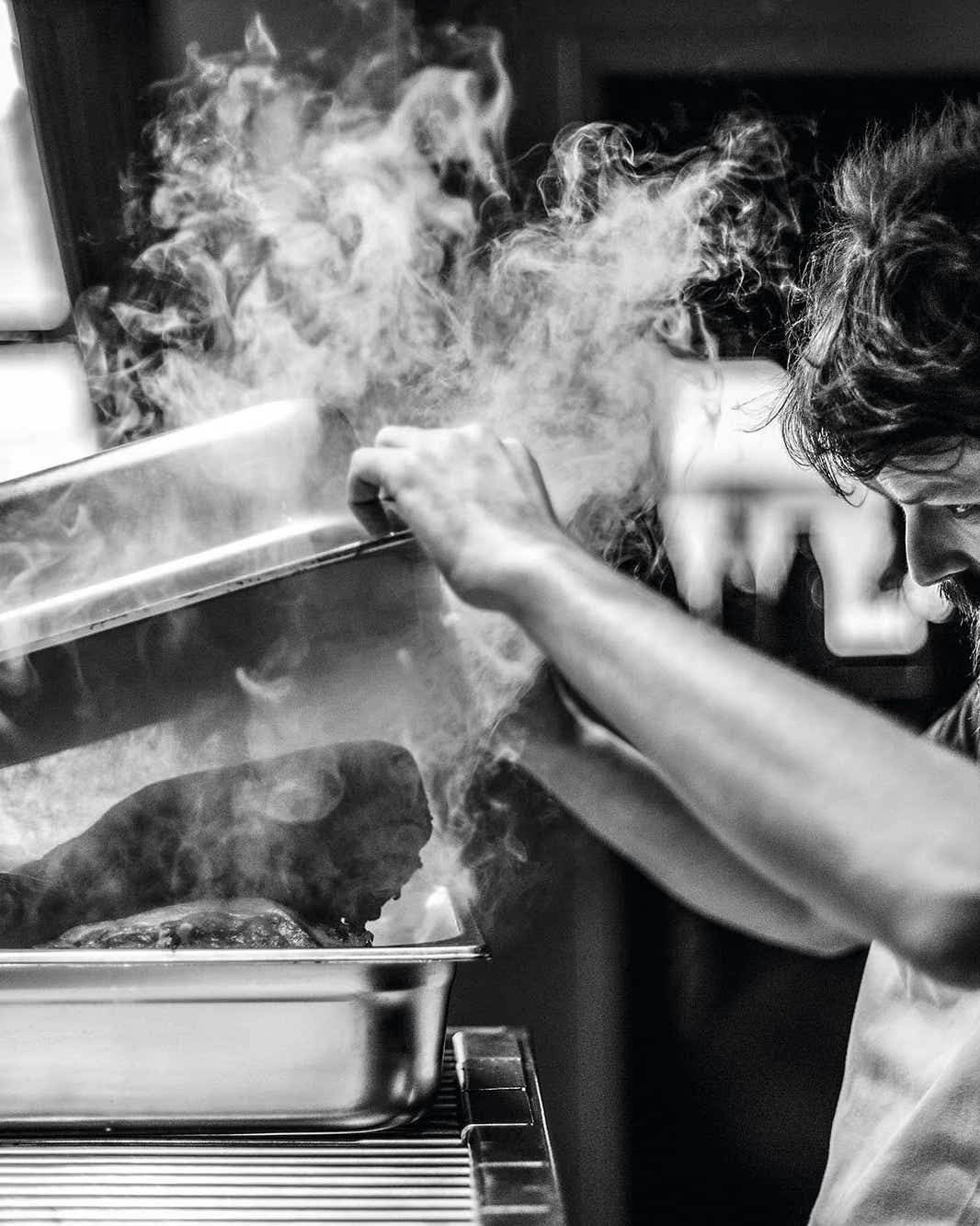
How a Broken Marriage Taught Chef Aaron Turner How to Cook Again
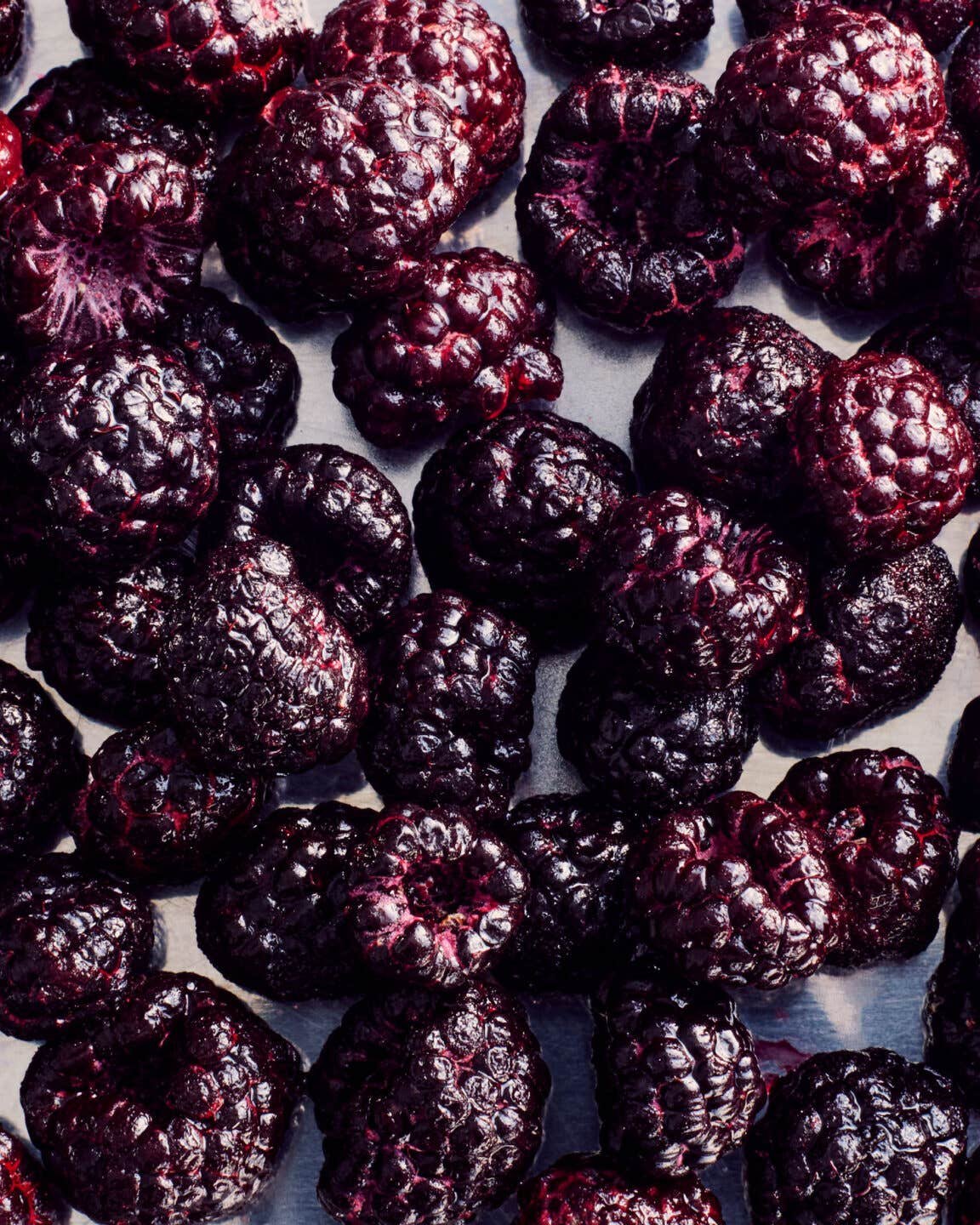
Black Raspberries Are the Fleeting Summer Fruit Worth Seeking Out
Meet the Children’s Book Illustrator Who Sees the World Through Food
The Mortar and Pestle Is the Timeless Kitchen Tool You Need
Eat Your Way Through Saigon

Where to Find the Best Cơm Tấm in Saigon

Source: www.saveur.com